

March 09, 2022 | By Steve Horvath, Connie Morrow and Jim Norman
You pay for what you get is meaningless if you don't understand what you're paying for, nor what you're actually getting.
The work product of your association's staff and third-party vendors (law firms, consultants, community association manager, etc.) is only as good as the direction, information (facts and context), conversations and questions you exchange.
Consider this excerpt from the Condo Law Handbook (page 105):
...I have also counseled many clients who were unhappy with their manager’s performance that they can, and should, change managers or management companies to get better performance, but they have been unwilling to consider a change, and were unwilling to even express their dissatisfaction with the manger because of concerns that a change would cost more money, or would be disruptive to the community. Even if you don’t want to change managers, providing constructive feedback to your manager, or asking them to modify their conduct to better meet your needs, should be a routine part of the relationship between a Board and its manager.
This industry perspective can be found in Proper Management — Common Ground March/April '22
Full blog document
Common Interest Community
CONTRIBUTORS
- Connie Morrow – Florida-based volunteer leader, FL LAC member and frequent contributor to the CAI Exchange
- Jim Norman – CMCA; CAM for The Park Lane Towers Condo Association in Fort Collins, CO
- Steve Horvath – Washington-based volunteer leader, founder of Condo Connection and frequent contributor to online discourse
A huge thanks to our contributors for making this blog possible!
BEST PRACTICES
- What best practices should common interest communities entertain before retaining a management company? What tips would you give a Board when searching for a new management company?
Connie Morrow:
- Be analytical about the business relationship - it’s not personal, family, or friendship.
- Clearly define SMART Board & Management expectations for going forward. (Specific, measurable, achievable, relevant, time-bound)
- Rate those expectations (I like using a nominal group technique method - each voter gets the equivalent of 50% +1 vote to apply against alternatives - 1 at a time to select priorities. Eg 10 options you select your top 6 priorities. Total and items with highest total move forward)
- Inter-relate the expectations (sometimes the highest priority is dependent on lowest priority - we invest resources on an outcome rather than an input; won’t get there from here)
- Actual vs Plan: Conduct a gap analysis of past behavior; can those gaps be filled going forward, at what cost, are both parties willing and able?
Jim Norman:
- Develop a Request for Proposal that includes the specific needs of the board and the community. It should include performance standards on customer service response times, how soon accounting statements are received, how association records are kept, board packet requirements, references from similar CIC-type clients
- Read the contract with a fine toothed comb and have legal review. Make sure the contract is clear on what services are included and what are additional costs (ala carte). It should specify what HOA management software will be used and how the association’s data will be preserved. Make sure that both on-boarding and off-boarding deliverables and costs are clearly included in the contract. If you have staff, make sure the contract allows them to be portable to another company.
Steve Horvath:
- First and foremost, management company selection is absolutely critical. This is not a task your Board should delegate, but given that there are willing and able volunteers, you can and should request assistance from a Selection Committee to assist with this process
- Plan ahead! The time required to transition from one management relationship to the next usually takes at least 3 months (90+ days). Your level of preparedness will directly correlate to both the overall transition timeline and the success of the transition.
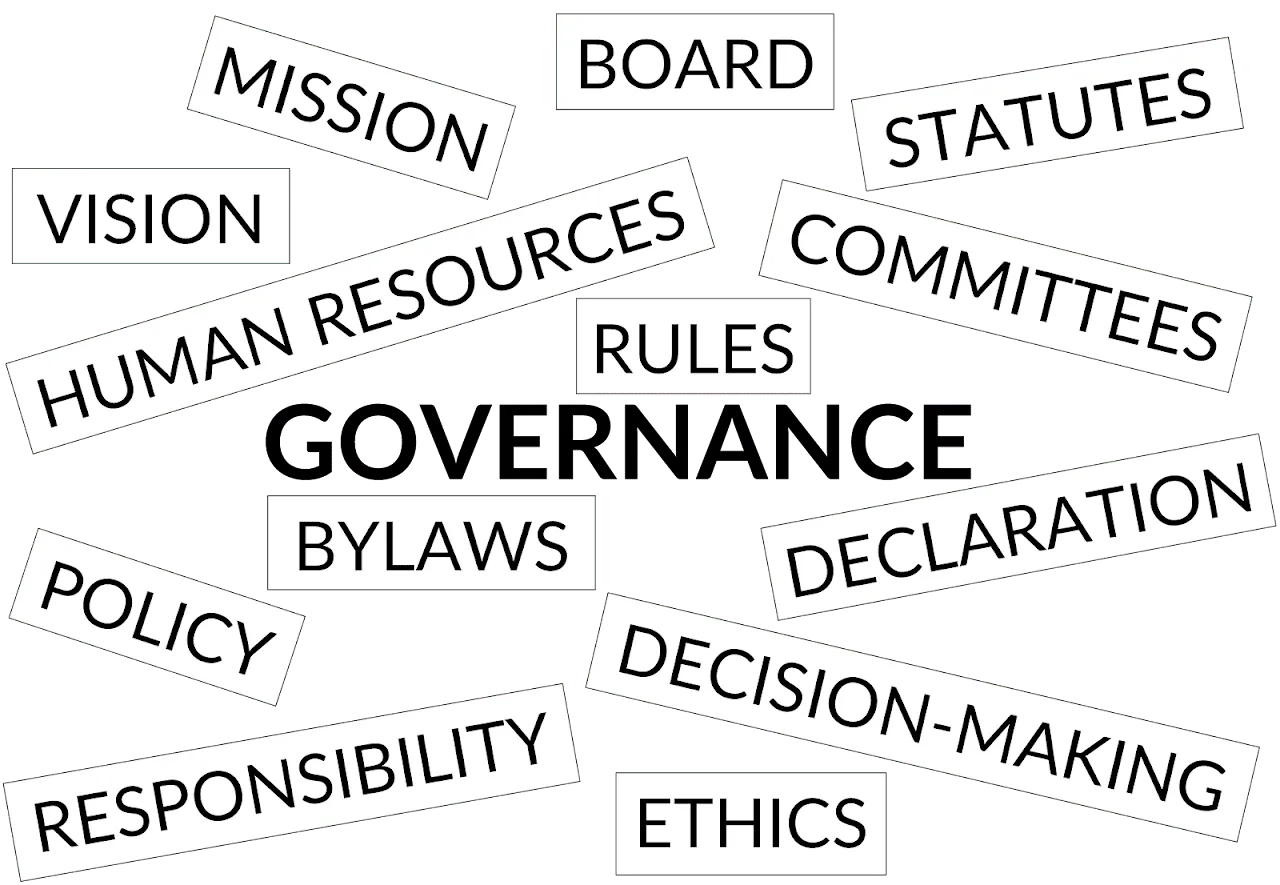
- Insofar as is possible without over-taxing your volunteer leaders, understand the processes and responsibilities of your current management company. Consider mapping out all of your operations into a governance matrix
- Carefully consider whether your CIC would benefit from an independent bookkeeper instead of bundling services. The core competencies for reliable Bookkeeping and management are separate and distinct.
- Create a written summary of all your association’s expectations, questions and concerns; package that summary into a standard RFP format
- Submit your RFP to at least 5 organizations with the goal of obtaining 3 responses; if you obtain more than 3 responses, narrow the field to 3 companies that your Board is willing to interview
- Require all RFP responses in a standard document format so that your Board can easily compare and contrast the content
- In addition to allowing plenty of time to interview prospective management companies, make sure you obtain references and perform due diligence by asking all references for honest feedback related to the details of your RFP
- Allow plenty of time to negotiate a fair and comprehensive contract
- If your Board does not possess the time and appropriate expertise, work with a consultant and your attorney to provide feedback on the selection process and redline the draft management agreement; otherwise, red-line the draft and then share it with your attorney
- Ensure that remedies for contractual breaches are clearly defined
- Consider financial remedies so that your CIC has a “non-nuclear” option to resolve most disputes without being forced to change management companies
- Always engage your attorney for a final review of the contract before you negotiate a red-lined copy with your new management company
- Ensure that remedies for contractual breaches are clearly defined
- What best practices should common interest communities execute after retaining a management company?
Connie Morrow:
- Prioritize and align procedural standards and measures between Association and Management up front eg how often will Board meet and day/month schedule; minutes timing; meeting administration and management of meeting equipment (laptop, TV, sound system); budget planning process; periodic notices, etc
- I would expect the Association to have samples of new management’s procedures and standards from the selection process. One of the first things to do is identify where Association practices and procedures deviate from management and prepare an executable plan to make conversions or not. If not, clearly record why and how to work around if it becomes an issue in the future eg legally accessible Association historical documents are all on paper but Management practice is to flat file digitize docs by title (association name.date.filetype)
Jim Norman:
- Designate a board member, usually the president, who is knowledgeable of the contract to have monthly or quarterly check-point meetings with the manager to review customer service levels, discuss complaint resolution, review monthly or quarterly walk-through inspections, board needs, project status, budget variances, etc.
Steve Horvath:
- Establish a transition timeline with clearly elucidated, mutually agreeable dates and deliverables for both your CIC and the new manager
- Establish a written communication and follow-up protocol that everyone understands. Make it specific and value-added.
- Ensure there is synthesis on all of the governing documents including the declaration, bylaws, rules and regulations, policies, procedures and resolutions. Establish clear expectations for how existing governance impacts operations. Don’t force the new manager to “reinvent the wheel”
- Let the management company do its job without compromising reasonable expectations and continuity of operations
EXPECTATIONS
- What actions should be expected from a new management company?
Connie Morrow:
- Company takes the lead to set up a transition schedule to include familiarization, sharing of administrative rules and standards, document version control, procedural reviews and adjustments, review and understanding of expectations.
Jim Norman:
- Demonstrated compliance with the management contract. Have the manager prepare a monthly report to the board on the on-boarding deliverables and status.
Steve Horvath:
- Expect competence that operationalizes requirements from the management contract into every day deliverables; this competence should be elucidated in a written plan that explains how the new management company is going to work through the transition period and move into ‘normalized operations’
- Financials should be polished and sparkling within 90 to 120 days
- Thorough, crisp and clear communication with owners and tenants
- How should historical documents be handled?
Connie Morrow:
- The Association should already know what state of organization the files are in and in the source selection process, I would expect the topic to have been discussed so there are no surprises.
- Association and Management need to know and agree on historical document management procedures up front - today’s document is history tomorrow so naming, version control and saving conventions are critical from the start of the relationship.
- A plan to convert Association documents to the “new” standard should be one of the early actions: what needs to be converted; what are the action steps, timing, ownership.
Jim Norman:
- It depends on the CIC budget. If paper documents haven’t been converted electronically, I think it’s best for past association records to be stored by the association using a document storage vendor. If all electronic, there should be a cloud storage solution in place that the board secretary oversees and other board members have access to for board transitions. Documents can be integrated by the management company, but the CIC should have a backup system of the pre-company records. The contract should specify how documents will be preserved and transferred in the off-boarding process.
Steve Horvath:
- Continuity of documentation and access to information is one of the single largest challenges facing CICs
- Affirm your established process for document management and document retention policy
- Ask your new management company to provide the Board on-demand access to all legacy documentation with the exception of specific confidential HR and unit violation material that the Board should not need to access
- Ensure that all governing documents are readily available to all owners
- If your community relies on your management company to provide a portal where owners and tenants access documents, please consider acquiring your own solution that remains fully intact throughout all transitions.

- How should financial reconciliation be handled?
Connie Morrow:
- Same as historical documents.
Jim Norman:
- The CIC’s CPA or tax preparer could be involved in overseeing the financial transition process.
Steve Horvath:
- All financial reconciliation should be complete within the first 90 to 120 days
- Your management contract should clearly elucidate responsibility for financial review (including invoice review), AP, AR and the whole nine yards. Reference this governance matrix

- What are the differences between the deliverables in a management contract and the professional standards established by licensing organizations?
Connie Morrow:
- Contract deliverables are measurable outcomes stated in SMART terms
- Professional standards reflect a community’s values expressed as actions needed to achieve results reflecting expectations of the profession.
Jim Norman:
- It depends on the contract. The contract should specify that any manager (portfolio or designated) should be accredited with at least a CMCA and it should specify the standards of conduct of the company, manager, and all staff that interact with the CIC in any way.
Steve Horvath:
- The Community Associations Institute (CAI) has positioned itself to oversee all formal credentialing, ongoing education, ethics and standards of conduct, including ethics complaints for both CAI Professional Managers and for CMCA credentialed managers through CAMICB
- Obligations in your management contract should include and/or reflect obligations established by aforementioned ethical and standards of conduct documents. Consider how the meaning of Undertake only those engagements that [a CAM] reasonably expects to perform with professional competence translates into deliverables and contractual obligations
- What are reasonable expectations for accountability from a management company and/or community manager?
Connie Morrow:
- It is reasonable to expect management to:
- own the stated outcomes in the contract
- to live up to or within community association management professional standards of conduct, and
- to factually report when outcomes and/or conduct exceed or do not meet the standards.
Jim Norman:
- The CIC should have discussed and decided minimum expectations in their management RFP.
Steve Horvath:
- Your management contract should include a set of expectations
- Additional implied expectations can be instantaneously understood by examining ethics and standards of conduct requirements. A few examples:
- Act in the best interests of the client; refrain from making inaccurate or misleading representations or statements; do not knowingly misrepresent facts
- Undertake only those engagements that [a CAM] reasonably expects to perform with professional competence
- Exercise due care and perform planning and supervision as specified in the written management agreement, job description or duly adopted Board policies.
- Be knowledgeable, act, and encourage [the Association] to act in accordance with any and all applicable federal, state, and local laws
- Be knowledgeable, comply and encourage [the Association] to comply with the applicable governing documents, policies and procedures

- Do the accreditations, credentials and/or experience level of a company and/or manager change those expectations?
Connie Morrow:
- Yes
- Professional accreditation and credentials are typically defined and often include some sort of licensing directly linked to a combination of experience and study knowledge.
- Experience in and of itself further infers a breadth and depth of knowledge contributing to the quality of performance against an outcome.
Jim Norman:
- No. The expectations should be company overall and not to a particular person or job.
Steve Horvath:
- Associations should establish a expectations based on their needs, their experience, and a common set of reasonable guidelines (like you’ll find in this article), not based on the accreditations, credentials and/or experience of any company or individual manager

- How communicative should your Community Manager be?
Connie Morrow:
- Boards operate within their own set of standards and dictate Management communications. I expect my Boards to define and publish their Operating rules and for the Manager to discuss and clarify those standards up front and to live up to them.
Jim Norman:
- Two business days for non-urgent emails and phone calls.
Steve Horvath:
- N.B. Communication preferences and styles can vary immensely
- Ensure that your management contract establishes a minimum frequency of communication between the manager and the Board
- The exact frequency of communication should relate to effectively delivering the subject matter: some topics should be ‘bundled’ into summary communications and others should be more conversational
- Identify electronic systems to manage lists (think Google Sheets, MS365/Sharepoint, MS Lists, etc.) that help facilitate efficient, accurate information exchange without creating an email tsunami

- What is a reasonable amount of time to respond to emails, phone calls, etc.? How often should you receive updates?
Connie Morrow:
- Again something to be established with the Board and shared with Owners if it is not in the contract.
- I have different standards depending on the contact:
- Owner personal financial information: acknowledge receipt of request for personal financial information within 1 working day and respond with answer within 3 working days.
- IF Owner financial information is available on line, I prefer the answer be given with a link to the answer so the Owner is made aware of his/her ability to access the information.
- On the third request for financial information the Owner has access to, it’s appropriate for management to explain that Owners are expected to get the information because it is readily accessible. This gives management more time to devote to helping Owners with more complicated issues.
- Owner Question or Comment related to an Open Board Topic - eg on upcoming meeting agenda or on calendar for future meeting. Acknowledge receipt within 3 working days, “thank you, this is an active topic to be addressed in a future Board meeting. Your question/comment has been passed to the Board for their consideration at that time.”
- Owner Question or Comment NOT related to an Open Board Topic. Acknowledge receipt within 3 working days, “thank you, this topic is not on the Board’s list for discussion in the near future. Your comment/question has been passed to the Board for future consideration. You may also raise your points during a Board meeting when the floor is opened for comment. Owners have 3 minutes to share thoughts at that time. Per Robert's Rules, comments not on a published topic are noted without Board response.”
- Question or Comment from a Board member? I expect management, up front, to set up a process related to Board contacts. Essentially if it is an urgent issue, an email or phone call with RSVP by xx:xx, and a short explanation should suffice. Otherwise, Board contact should be acknowledged within 2 working days.
- The second thing to clear up front is who the Manager responds to and on what topics.
- In my experience the manager has 3 primary support roles: Governance (President/VP), Resources (Treasurer) and Engagement/Communications (Secretary).
- In some cases the manager responds only to the Board President.
- In others, the manager is supported by back office professionals and the Board is able to go directly to them cc:manager. e.g. treasurer goes to the finance office.
- I am also aware of situations where Committee Chairs correspond with the manager or back office.
- Update time frames vary based on the subject matter…
- As Board Pres/Vice I expect to be cc’d on any comms between the manager, the attorney’s office, an Owner or a Board member.
- On other things I go by the issue e.g. we had a seriously delinquent owner (8 years of late payments); under a negotiated settlement, the owner paid all fines, attorney costs, and agreed to pay future assessments on the 1st of each month. I expected to be told if she was late.
Jim Norman:
- Board members should be informed immediately of emergencies, vendor contract performance issues, significant customer service problems, etc.
- Make sure it’s all in the management contract!
Steve Horvath:
- Responses are not necessarily solutions!
- The process of providing efficient responses (and solutions) is greatly improved by a consistent and well-structured communication that includes lists of information
- 48 to 72 hours is a reasonable amount of time for most responses and 120 hours (5 business days) is the maximum time for acknowledgement
- Certain responses may be placeholders while more information is gathered
- Your management contract should establish clear SLAs (service level agreements) for response times based on categories of subject matter

Communication image by Muhammad Ribkhan from Pixabay
Certificate image by Clker-Free-Vector-Images from Pixabay
Bullseye image by Darwin Laganzon from Pxabay