

July 5, 2022 | By Steve Horvath
Despite marketing messages from the banking industry to the contrary, the key to achieving greater return on investment is moving away from your "local" bank and managing your funds from a brokerage account which is less convenient, but much more rewarding in terms of flexibility and yield.
Don’t allow fear of the unknown to stop your community association from investing the time and money necessary to create an investment strategy that can stand the test of time. NEXT STEPS to consider:
Full blog document
As a follow-up to DOLLAR$ and SEN$E: Are you Investing, Gambling, or Guessing?!?, this article explains some common terminology and practical information common interest communities (CICs) can take to maximize returns from principal-guaranteed securities such as:
- Money Market Funds (MMFs); also view What are MMFS?
- Certificates of Deposit (CDs)
- ‘Traditional’ CDs issued by your bank
- Brokered CDs
- Market-Linked CDs (MLCDs); Should you Avoid MLCDs?
- IntraFi Network Deposits (IFNDs; rebranded; formerly CDARS)
- US Treasuries (Bills, Notes and Bonds); also view Treasury Direct
If your CIC is still stashing cash in MMFs, IFNDs and/or traditional CDs issued by your local bank, chances are likely that the interest being earned is a fraction (possibly 1/10,000th or less) of a more favorable yield available via US Treasuries and/or brokered CDs.
The aforementioned securities offer convenience, but typically require a monumental sacrifice of yield.
Our association’s brokerage firm (Fidelity) keeps uninvested cash in a money market fund (a fairly typical solution). MMFs generally offer low to moderate yields because they hold US debt securities (Treasuries). As you’ll see below, MMF yields may well be superior to CD rates offered by certain banks. Unlike CDs that typically lock in a fixed APR, money market funds that invest primarily in Treasuries will continually adjust their yield and eventually catch up with the US Federal Funds Rate. As noted by The Wall Street Journal in You're Giving Away Yield and Don't Even Know It, the annual expenses charged by MMFs generally increases as yield increases and may cost up to over 100bps (1%). For this reason, keeping your cash in brokerage MMFs is superior to what you’ll earn at your local bank, but will always yield less than brokered CDs and Treasuries.
MMFs like FZDXX that’s currently paying 0.17% will pay over 1% eventually. Having your excess cash waiting in a respectable MMF should always pay more, often significantly more, than cash in the bank. As of July 8, 2022:
- 0.01% = EXAMPLE Bank Account Savings Interest Rate
- 0.10% = EXAMPLE Bank Premium Money Market Interest Rate
- 0.18% = EXAMPLE Brokerage Premium Money Market Interest Rate
- 1.44% average 7 day yield (!) as of July 12, 2022
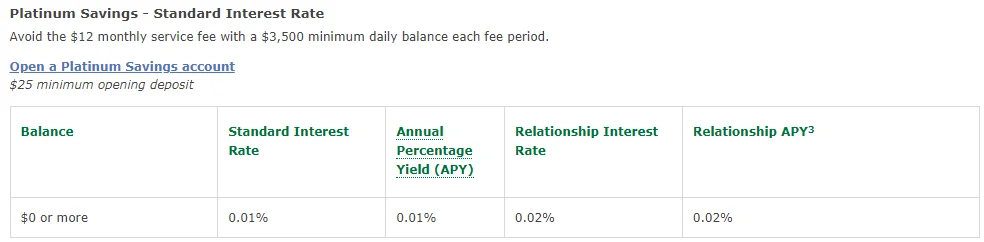
Example Wells Fargo Savings Interest Rate as of July 8, 2022
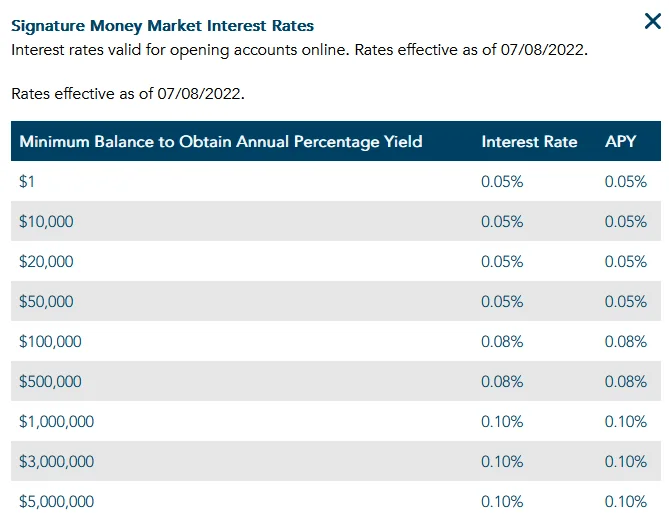
Washington Trust Signature Money Market Rates as of July 8, 2022
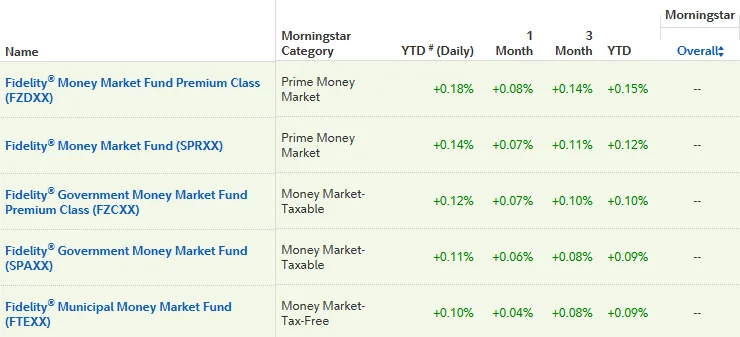
Example Fidelity Money Market Average Yields as of July 8, 2022
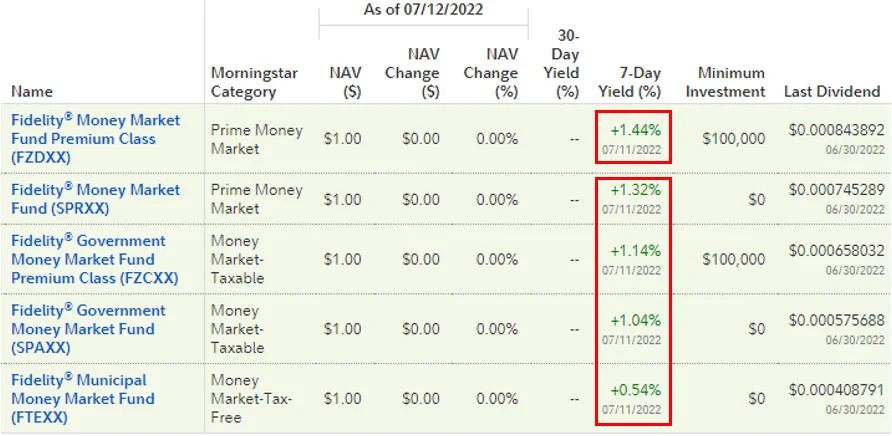
Example Fidelity Money Market 7 Day Yields as of July 12, 2022
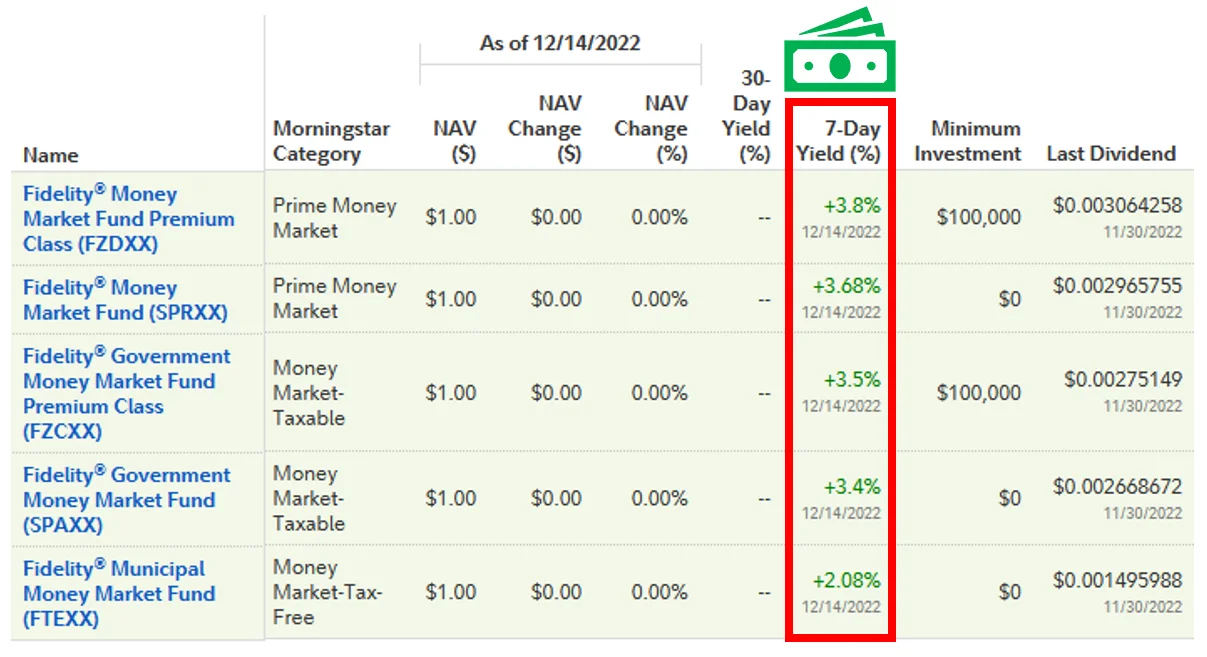
Example Fidelity Money Market 7 Day Yields as of December 14, 2022
Our association’s local bank (Washington Trust) currently pays between 0.05% and 0.25% APR as of July 8, 2022 for deposits from $500 to over $100,000 (“Jumbo”) for periods of 3 months to 60 months.
IFNDs offer similar, if not reduced returns vs. ‘traditional’ CDs, with the benefit of automatically rolling over as they mature. IFNDs came about as a way to keep funds within FDIC insurance limit of $250,000.
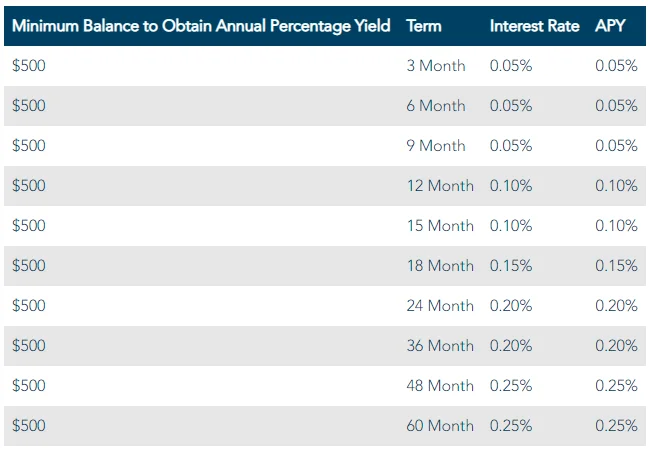
Washington Trust Certificates of Deposit Page as of July 8, 2022
US Treasuries have a $10,000,000 limit per purchase and eliminate the need to concern yourself with FDIC insurance because they are always backed by the full faith and credit of the United States of America.
Compare the CD rates published above with what you see below:

Fidelity Fixed Income, Bonds & CDs page as of June 8, 2022

Fidelity Fixed Income, Bonds & CDs page as of July 5, 2022
Why, you ask, are these rates so vastly different?
- Financial institutions, especially banks and credit unions, generate profit by borrowing at a lower rate and lending at a higher rate in their own version of “buy low, sell high.” Offering products consumers and institutions want to purchase is a competition of sorts and so there’s an open market of materially different rates.
- As confirmed by The Wall Street Journal, Banks Are Offering 4.5% CDs-Just Not to Regular Customers: purchasing brokered CDs offers 100% or more yield vs. purchasing CDs directly from your “local” bank.
- The Federal Open Markets Committee (FOMC) has aggressively increased the US Federal Funds rate to combat inflation. Note two things from the charts above:
- The Fed’s 75bps increase as of their June 15, 2022 meeting rocketed rates higher
- There’s an incredibly compressed and slightly inverted yield curve: 1 & 2 year T-Bills yield more than 3 and 10 year Notes
- LEARN MORE: Bonds flash recession warning light as key part of the yield curve inverts again
- The FOMC meets again on July 13. Read this July 6 Markets Wrap from Bloomberg. Another 75bps rate hike seems imminent
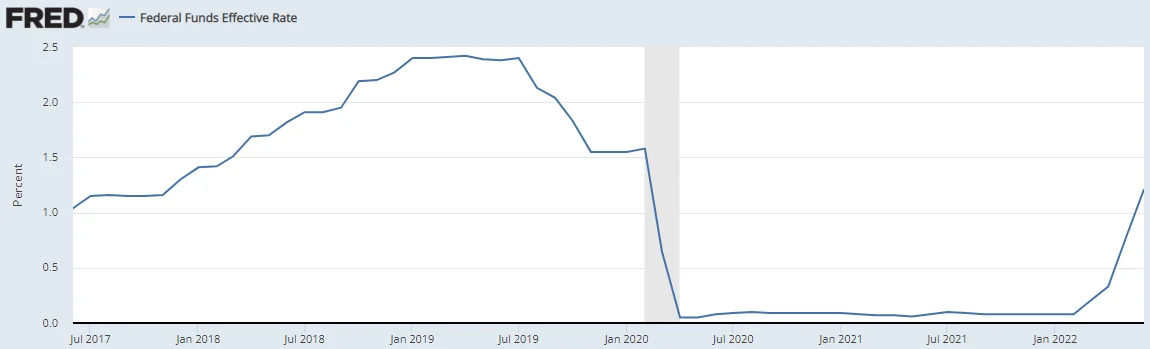
Federal Funds Effective Rate (Last 5 Years)
Interest rate risk is a key factor many individuals and organizations fail to consider. A 50 basis point (bps), 100bps or 200bps difference might not seem like much over the course of a few months and/or given a relatively small investment, but these differences in yield drive significant opportunities for additional returns across the decades of time captured by your CIC’s reserve study and reserve funds. The following example from our free Reserve Study Calculator shows the difference between 1% and 6% returns over 40 years. What would your community do with an extra $2,895,000? Larger investment returns make it easier to keep assessments in check over time.
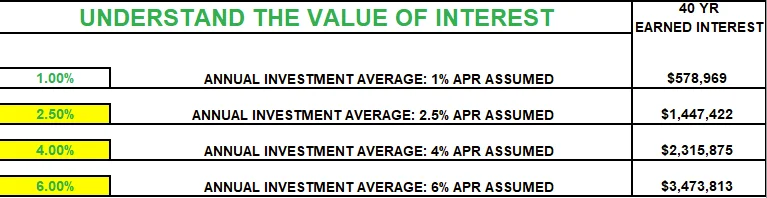
The impact of simple (non-compounded) yield over 40 years. Reserve Study Calculator
For a slightly less complicated example, let’s examine the returns on an initial investment of $100,000 compounded annually over 30 years.
The difference, at year 30, between 1% and 2% APR is $46,351.
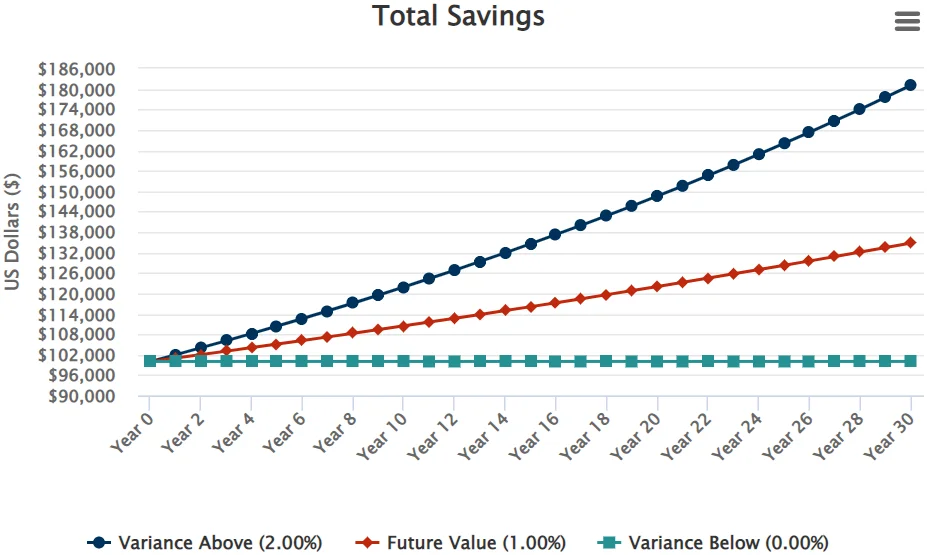
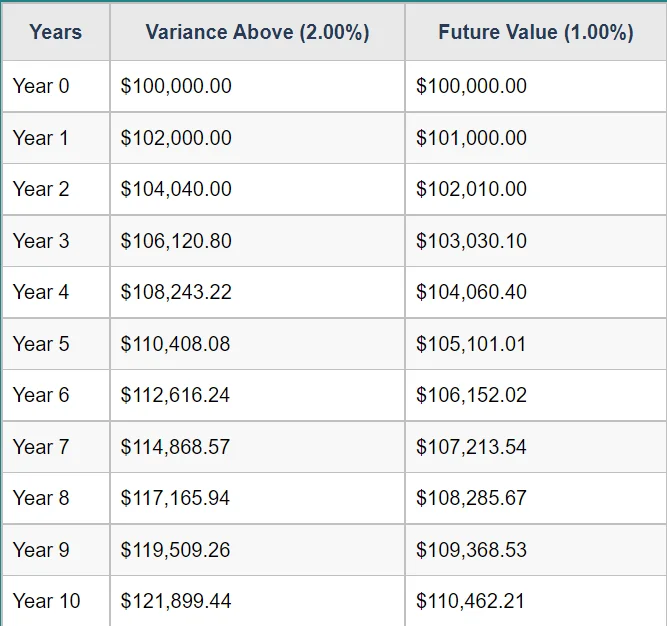


Returns calculated by Investor.gov
Establishing a brokerage account (options through Charles Schwab, Fidelity, TD Ameritrade or even directly with banks such as Chase, US Bank, Wells Fargo, etc.) opens doors to purchase brokered CDs and US Treasuries. A few things you should know:
- As with any financial account, you’ll need to keep your authorized signers up to date. The process might be more arduous than working with your local bank.
- If you do not already have one, you should consider establishing a brokerage account to invest in Treasuries unless your existing banking relationship provides this ability
- US Treasuries generally have a $10MM limit per purchase
- CICs with significant reserves can easily invest in large tranches
- Both FDIC insurance and US government debt securities (Treasuries) are backed by the full faith and credit of the United States of America
- US Treasuries make the $250,000 FDIC insurance limit irrelevant. If the US Government defaults on its debt, gold bullion is likely the only way to guarantee your principal
- Certain financial institutions allow you to auto-roll your T-Bills just like auto-rolling a CD or IFND
- US Treasury Zero-Coupon Bonds provide a discount to face value at the time of purchase relative to their yield. Their principal value also fluctuates more than other bonds based on FOMC action to adjust overnight interest rates.
- US Treasury I-Bonds adjust their yield semiannually relative to inflation. These bonds pay 9.62% APR between May and October 2022, but there are some hoops:
- A Treasury Direct account; your “Entity Account Manager" MUST:
- be a corporate officer or designated employee and
- be authorized to act alone
- $10,000/yr limit / org for electronic purchases via Treasury Direct
- Must be held a minimum of twelve months
- Redemptions before five years forfeits three months of interest
- A Treasury Direct account; your “Entity Account Manager" MUST:
- Brokered CDs typically pay a higher APY than comparable term CDs from your local or national bank.
- Compare Forbes Advisor and Bankrate with brokered CDs from Fidelity
- Brokered CDs’ principal value can change unless held to maturity
- Time to maturity and interest rates impact the value
- Falling interest rates may allow the sale of a brokered CD for more than its original value
- Rising interest rates may lock in a brokered CD to maturity because disposing of it would result in a loss of principal
- Some states’ ‘Blue Sky’ statutes restrict purchasing brokered CDs from other jurisdictions.
- Time to maturity and interest rates impact the value
- Brokered CDs may include a call option that allows the issuer to redeem them at face value (plus unpaid accrued interest) prior to the stated maturation
CONCLUSION
- Use this free Reserve Study Calculator to estimate your cash flow needs and to better understand how interest compounds over time to supplement your members’ assessments and reserve contributions.
- Understand all restrictions on how your CIC’s funds can be invested
- Some organizations limit themselves to principal-guaranteed securities and others do not.
- Discuss your options with an investment professional
- N.B. Many CICs have dedicated volunteers who are willing and able to create investment policies and strategies. Start with this example Replacement Reserve Funds Management Policy
- Discuss the facts with your members
- Write an investment policy (view example in this Reserve Resource Document)
- Consider updating your declaration / CC&Rs to codify your investment options (which typically requires 67% approval of your members)
- Don’t leave decision-making to the whim of changing Board discretion and lack of continuity over time! Investing – of any kind – requires a plan and steadfast commitment.
- Consider self-managing your investments if they are limited to principal-guaranteed securities
- If your CIC decides to invest in municipal bonds, corporate bonds, equity indices, individual equities or any other securities, you should absolutely:
- have a written investment policy
- hire a professional to manage your funds according to your written policy
- Meet with your investment professional at least annually
- READ: My financial adviser mostly opts for index funds. Is he worth what I pay him?
- “Our psychology tends to sabotage us as investors and it is navigating bear markets where financial advisers really earn their fee, helping us keep calm, avoid bad decisions and stay the course” - Aaron Klein
REFERENCES
Bank CDs are an Insult to America’s Savers — Bloomberg | 03/01/23
Higher Rates for Me, Not for Thee — Bloomberg Odd Lots Podcast | 02/23/23
The $42 Billion Question: Why Aren’t Americans Ditching Big Banks? — WSJ | 12/08/22
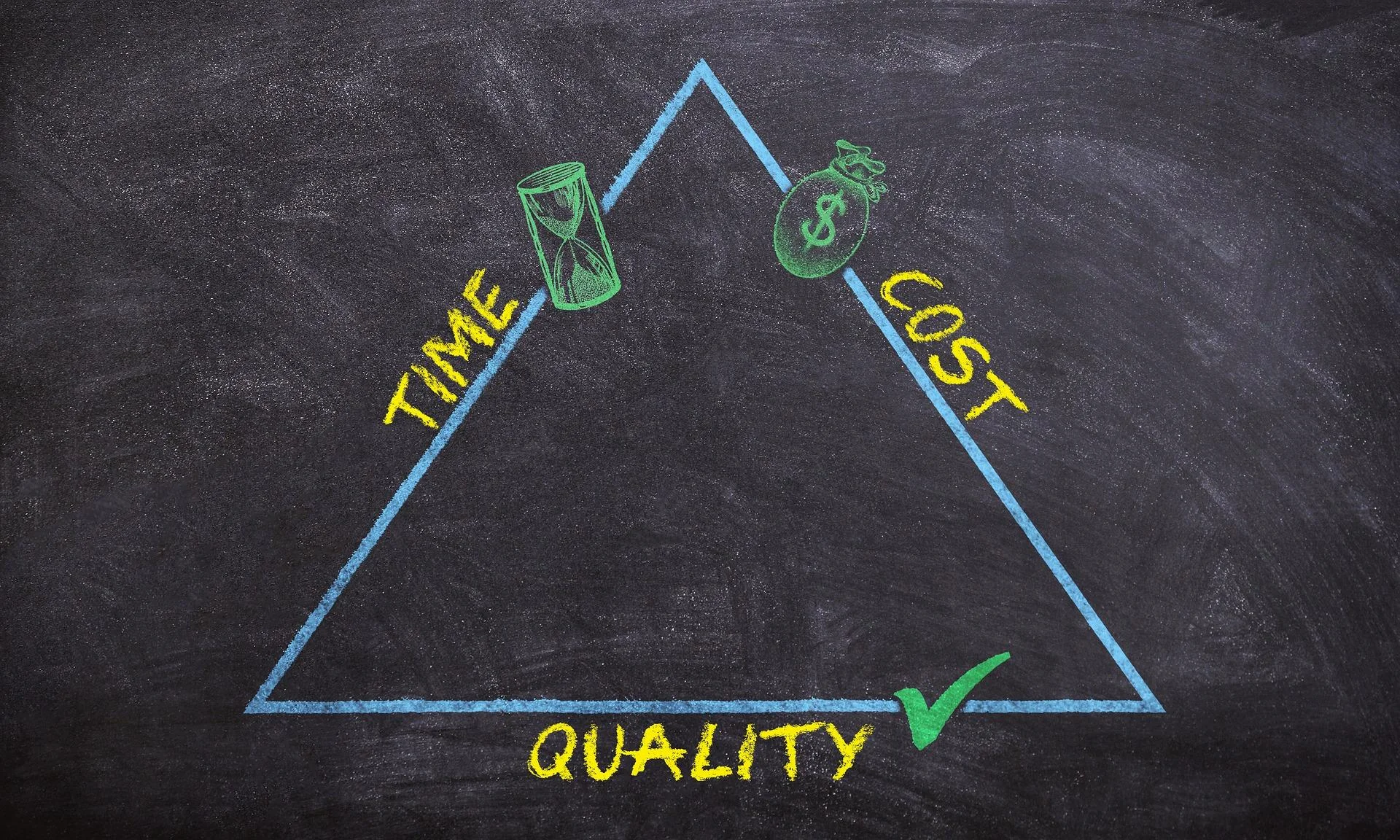
Time is Money
What’s the Cost? YIELD!
Invest wisely!
Money Growth image by nattanan23 from Pixabay
Time, Cost, Quality image by Dirk Wouters from Pixabay
Other images by their respective sites and the Author