
June 15, 2022 | By Steve Horvath and “Susan”
Full interview document
I recently had the opportunity to speak with a seasoned community association manager (CAM) who was willing to provide candid feedback about experiences working with multiple management firms and common interest communities (CICs) for over a decade. Our 90 minute interview has been condensed for clarity and specific details have been omitted to preserve anonymity and to prevent retaliation and industry backlash (a common source of concern for CAMs across the United States). All italicized quotes are those of our subject “Susan”. Please enjoy Susan’s enlightening insights.
Lest you think this is a hit piece or that Susan is a disgruntled former manager, Susan continues to thrive in her role as a CAM and currently holds credentials from both CAMICB and CAI. Let’s kick things off with some encouraging words:
- I’ve never been disappointed in any of my CAI classes. I’ve never felt like those classes were diploma mills. They definitely talked about the appropriate way to behave.
- I don’t think anyone I worked for is inherently unethical. I think there’s a huge pressure with the enormous companies to preserve the bottom line. Everyone’s bonus is tied to client retention.
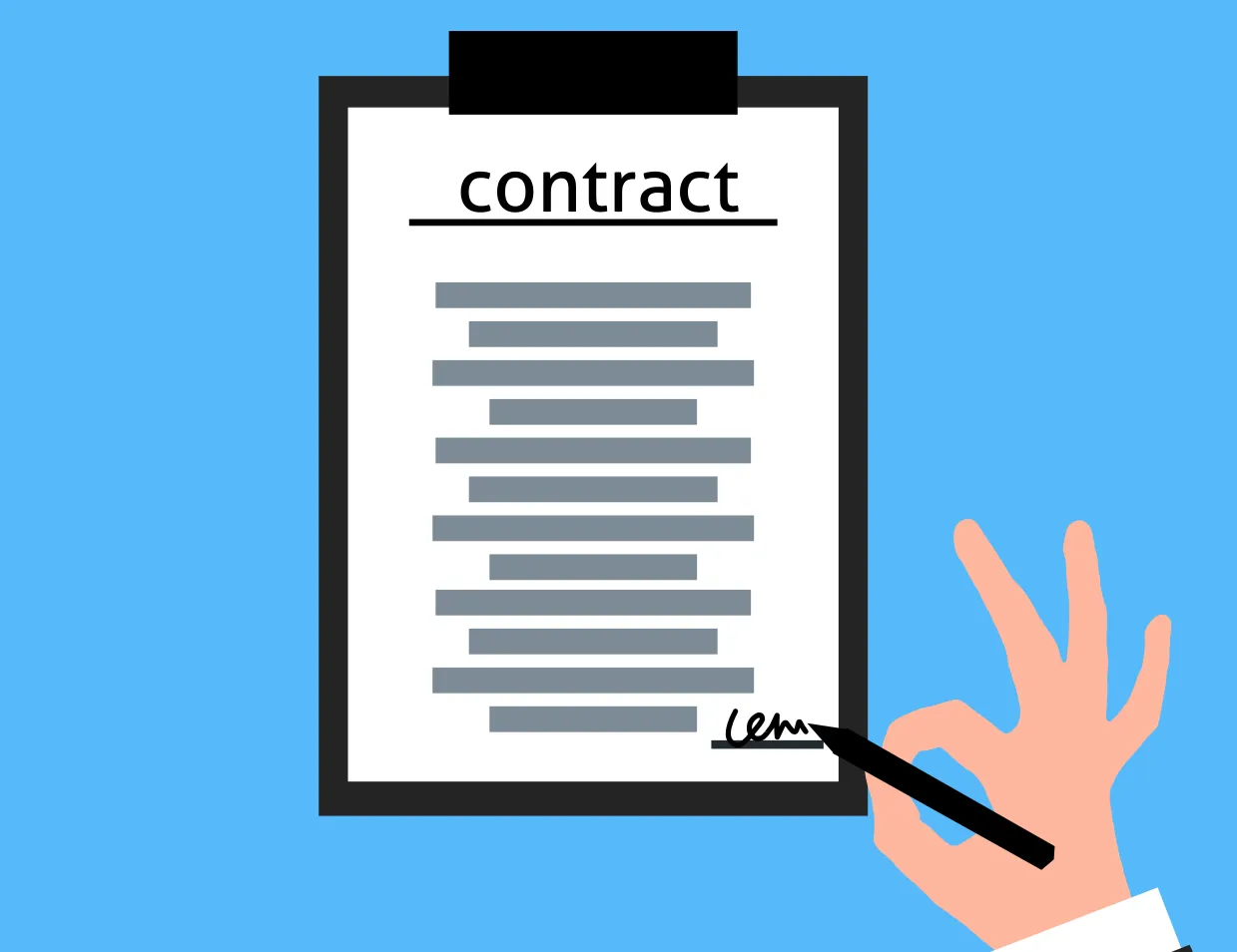
Susan started her journey working on-site with a single property and transitioned into the world of portfolio management for career advancement. There are two basic management models: portfolio (multi-property) and full-time on-site (single property). Within portfolio management, there are a further two further models (and some nuances you might like to discover in this example management contract):
- “All you can eat approach” where you promise the world for a flat fee.
- “Nickel and dime approach” where everything beyond the most basic service is a Schedule A fee.
- One company charged a fee to send emails to homeowners
- Eventually the Board comes not to trust you because all recommendations come with a cost
Susan told me that credentialing has always been encouraged since management companies view credentialing as a marketing tool, but is often not required:
For some of the larger [management] companies, they churn through managers so quickly that it doesn’t make sense to require credentialing because many folks only last 6 months.
A high churn rate, combined with the fact that some companies only cover half the credentialing cost, reduces the opportunities for credentialed CAMs. Susan believes in training and credentialing and has this to say about the CMCA credential:
- 16 hours of education is better than nothing
- Licenses at least help ensure someone has shown the commitment to taking the classes
- An intense amount of information flung at you at once which is very much like being a portfolio manager. It’s a very quick way to figure out if someone is going to last or not.

Susan’s experience working with large portfolio management firms is best characterized as “all gas, no brake”:
- Big companies just don’t say “no” to new clients
- Managing 7 to 15 properties a month
- 15x 50 home communities is manageable, but 15x communities with hundreds or even 1,000 or more homes is not
- The portfolio was constantly changing because the staffing load was constantly in turmoil
- There are some communities that I don’t even remember managing
- Large discrepancy between what sales people promise and what a CAM can actually deliver
- I’ve spent a lot of time cleaning up messes from people that were overwhelmed and not suited for the job
Susan highlighted excessive load, lack of training and low pay as three key challenges facing the portfolio management industry:
- Most portfolio managers just have way too many properties
- With an on-site manager, you’re not paying for on-site time, you’re paying for dedicated attention.
- You have to look at communities based on the number of houses or units.
- If you have a small enough portfolio, it gives you the opportunity to manage proactively.
- e.g. an orderly proactive inspection of the common areas
- you can replace things before they have utterly fallen apart
- Otherwise, you’re dealing with an endless flood of challenges that require a reaction: the fountain is broken, the reserve study is due, the budget is due, the audit is due, etc.
- If you have a small enough portfolio, it gives you the opportunity to manage proactively.
- When you have 10 to 15 properties, all you can do is react and wait for things to break. When you have these huge property loads, you just can’t think ahead.
- Also, the lack of training
- I’ve been a trainer and I’ve trained new managers
- The only way to learn how to do this job is to do this job. You can’t sit in a classroom and learn how to juggle 15 different properties.
- It certainly would be helpful if [management companies] spent more time teaching people how to read governing documents
- Because turnover is so high, there is no time to learn about the concept of CICs and the history and what your function is.
- On Day 1, it’s “here’s how to use the software and start following this person around for a couple weeks.” It’s a constant cycle.
- The low pay doesn’t help
- The low pay is there because management companies want to make money for the owners and their shareholders.
- They want to charge the lowest possible management fees because nobody who lives in an HOA is happy when their assessment goes up. Of all the things on the income sheet, that’s the one you can least demonstrate the value of.
I was struck when Susan emphasized that homeowners are not the enemy and recommended treating people like human beings instead of obstacles with some compelling insights about why [CIC management] is a fundamentally flawed industry:
- I do find it deeply disturbing the extent to which the [industry] material is painting homeowners and board members as obstacles and opposition. Homeowners are the people we’re trying to service. They’re not our enemy.
- The worst example: an ADA class…
- The class was all about how to avoid offering accommodations to people. If someone wants a ramp to the clubhouse, you should tell them to pay for half of it.
- “Let’s make your job easier, so you don’t have to deal with compliance.”
- Instead of communicating what our obligations are, the entire class was how to avoid our responsibilities
- The worst example: an ADA class…
- The entire industry is geared toward disempowering Boards and homeowners. Make a Board as dependent on you as possible so they keep renewing the contract.
- The industry is so closed that you don’t know who has fired a management company.
- Consumers, in this case Board members, cannot meaningfully research management companies because they have no idea which communities they used to manage and have no contact information for the current board members (who often change once a year)
- The people supervising the manager are going to be the people in the management company and they have no incentive to take action.
- Upper management is motivated to keep the account, not to ensure that the CAM is acting in the best interests of the association.
- Who watches [the management company] to make sure they don’t overcharge [the HOA]? Homeowners!
- CAI Press has some great materials, but if they are just going to be about propping up the for-profit sector of the industry, homeowners are not going to trust them.
- It goes back to how many homeowners and board members know that about CAI. How many are going to do the research?
- That’s the whole reason the industry can carry on in this unethical way
- The only watchdogs are the homeowners and most don’t know what they don’t know and most of them are not going to initiate litigation.
- Most people just want to buy a house and live their life.
- It goes back to how many homeowners and board members know that about CAI. How many are going to do the research?
- [CIC management] is fairly “low stakes.”
- Nobody is going to die if there’s no quorum at a Board meeting.
- Half the time homeowners have no idea what the quorum should be, or if meetings should be closed or open, or what requires a board vote or a membership vote or what their rights are in their state.
- If anyone would actually read their own governing documents, they would know whether or not their association is being run properly.
- Management companies can get away with ignoring state laws and governing documents because most homeowners are never going to read them. It's an industry that thrives on the apathy of its clients.
- [Management companies] are safe in that most homeowners are never going to read the governing documents.
- There’s no meaningful government oversight of CICs.
- Even when there are state laws that limit the power of an HOA, it is up to the homeowners to know the law and enforce it through civil courts.
- The only way for an individual homeowner to hold a management company or Board accountable for violating the governing documents or state laws is to sue them. Most people are not going to do that.
- If enough homeowners get together they can vote out a bad board and fire the bad management company. Most people are also not going to do that.
- Most of the time there are no provable damages. There’s no measurable harm.
- There aren’t really any consequences for not doing the right thing.
- If you work for a large company and the expectation is that you do not lose clients, it is understandable why someone might say “it’s not a big deal.” It’s not worth losing money because the Board is not following their documents.
- If you’re the VP of this division and you’ve lost 17 clients in the course of the year, that’s going to affect your bottom line.
- All they’re thinking about is X number of management fees have left the company.
Susan’s early career was at first sensible, but common sense, ethical perspectives clashed with corporate imperatives:
- I was naive back then… I thought “It’s so odd that all my properties have the same landscaping company because they’re not very good.”
- No one ever stopped me from firing a vendor I wanted to fire, or ordered me to hire a particular one. It was all very subtle. My complete inability to get the hint saved me from an ethical dilemma!
- Nobody wanted to admit there was a conflict of interest
- There are some unsavory and unethical elements between management companies and vendors.
- No one ever stopped me from firing a vendor I wanted to fire, or ordered me to hire a particular one. It was all very subtle. My complete inability to get the hint saved me from an ethical dilemma!
Inappropriate vendor relationships aren’t the only challenge. Susan once experienced an annual meeting / Board election process where quorum wasn’t reached and proxies were a mess, but upper management’s direction was to “just trust the Board'' despite clear evidence of a legally invalid process. After pressing the issue, management directed Susan to “keep your mouth shut” while the management company identified an attorney who would support the series of errors. Thankfully a Board member started asking some questions and an ethical attorney helped correct the situation. Things escalated at another property when the Board wanted to commit insurance fraud and Susan was told to “do what the Board wants at any cost.” Management company pressure to do the wrong thing is especially bizarre when one considers four of the basic standards for community association managers:
- Act in the best interests of the client; refrain from making inaccurate or misleading representations or statements; do not knowingly misrepresent facts
- Be knowledgeable, act, and encourage clients to act in accordance with any and all applicable federal, state, and local laws
- Be knowledgeable, comply and encourage clients to comply with the applicable governing documents, policies and procedures
- Undertake only those engagements that you reasonably expect to perform with professional competence
Susan sums it up this way:
The Board that asks you to break their governing documents and asks you to make unethical choices is more likely to keep pushing the envelope and it eventually leads to a material consequence.
It isn't entirely possible for a manager who works for a management company to adhere to the CMCA standards because there will always, eventually, come a time when the best interests of the association and the best interests of the management company conflict.
According to CAMICB's Standards of Professional Conduct: “As a reminder, the key reporting relationship in a community association is between the manager and the volunteer Board. The manager is hired by and reports directly to the elected Board of Directors.”
And that really isn't true when you work for a management company.
Susan’s formative experiences at large management companies led to smaller operations:
- Smaller [management] companies have the ability to say “I don’t want to deal with this Board that won’t follow its own documents” and they have the luxury of being able to fire a client that wants them to behave unethically.
- Management companies tend to want all their boards to operate in the same way. Same bank, same insurance broker, same form templates, etc. There's nothing inherently wrong with that; when you have dozens of properties to manage it makes sense to streamline things. You don't need to reinvent the wheel for every property. But, sometimes boards want more specialized treatment. You're more likely to get that from a smaller company.
- Smaller companies also have lower turnover, in my experience, because the property load for managers and accountants is lower.
Susan’s years of experience working as a portfolio CAM have offered her satisfaction that she passes on to us with some poignant advice:
- I’m on a mission to make people hate their HOA a little less
- On the whole, the homeowners are the people I’m there to serve.
- It’s satisfying when I’ve been able to turn someone around and get them from absolutely hating the concept of HOAs and to get them to be like “I don’t love this, but I get it”
- There’s a massive amount of misunderstanding about what CICs are and what they’re for. My goal with every community I’ve ever managed, my goal is to educate owners.
- Turning a downward-spiraling community around is very satisfying
- I don’t blame any homeowner who wants to come home and go into their garage and live their life. BUT, if you don't want to go to meetings or read your documents or participate in your association, you have to accept that things will happen that you don't agree with. No one is going to keep an eye on your Board for you. If you don't like your HOA, or HOAs in general, the solution is to get more involved in them and make change from the inside.
- You are not going to dissolve your HOA
- Saying HOAs are stupid and they shouldn’t exist is not useful energy
- Communication with homeowners is magic. It’s the easiest way to improve relationships.
- Lack of knowing what’s going on is the largest homeowner complaint.
- We all have difficult homeowners and board members. I have to remind myself just because I’ve answered this question a thousand times in my career, this is the first time they’ve asked it. This is part of my job.
- If we pivoted away from preserving property values and focus on acknowledging the requirements to maintain common property and not measure how long blades of grass are … it would reduce the bad taste of HOAs are snobby people that want to rule your life.
- Focus on common area maintenance and make that the reason we exist. That’s something we can control.
- Issuing violations is lowest on my priority list. You don’t ignore things, but you put things into perspective.
- I am obligated to pursue violations in whatever manner a board wants, but I encourage them to put things into perspective and not hyperfocus on violations. You shouldn't sit in front of a house looking for reasons to write them up.
- I’ve never seen a study that really demonstrates that an HOA community has higher property values than a house in a non-HOA neighborhood.
- The market, the school district, even the kitchen will have more impact on property values. Maybe folks want a pool.
- An HOA can only do so much for you. It’s always going to be the house that sells. Acknowledge that an HOA has little, at best, to do with property value.
- The market, the school district, even the kitchen will have more impact on property values. Maybe folks want a pool.
- Raise of the standard of your common area maintenance and owners will eventually come to meet the standard. It takes longer, but it works.
- I think we positioned [the industry] as [common interest] communities should be managed by professionals, therefore your management expense is a vital and essential part of the budget. Pay managers adequately, therefore you’ll have people commit to the job and get licensed. I do think management would improve.
In closing, Susan pinpoints some of the reasons for the “race to zero” and the proliferation of mediocre management in a way that resonates with seasoned homeowners and volunteer leaders:
Owners don't see value in good professional management because so much of good management isn't [directly] measurable. You'll never know about the accidents that didn't happen because your manager spotted that buckling sidewalk and had it fixed before anyone tripped or how much water was saved because he saw that one part of park was more lush and green than the rest and realized there must be an irrigation leak or how much you saved in collection fees because your manager has such a good relationship with the membership that homeowners reach out to arrange payment plans before they are delinquent. And there's definitely no way to assign a dollar value to "doing the right thing.”
Because owners don't see the value of good management, they don't want to pay for it. And because they don't want to pay for it, management companies are in a race to the bottom to charge the lowest possible base fee. Because they charge so little, salaries are low and portfolios are large. Because salaries are low and portfolios are large, managers lack time and motivation to give good service. It's a vicious cycle.
Worst of all, it's a vicious cycle that nobody is motivated to break because they don't have to! Industry wide, the bar is so low that you don't need to be great. You only need to not be actively bad. Few associations have the volunteer resources to self-manage; barring a huge financial loss or actual embezzlement, most boards will keep their mediocre management company, or go to another mediocre management company. The difference between a great manager and an adequate manager isn't discernible to the average homeowner, and isn't perceived as valuable enough to warrant raising assessments.
How are you measuring your management experience?
Microphone image by Jorge Guillen from Pixabay
Ruler image by Clker-Free-Vector-Images from Pixabay